


 Call
 Text
 6 min read
 Last updated


Sunny Isles Beach is one of the few cities on the coast where the short-term rental conversation starts with the building, not City Hall. Most of the housing here is high-rise condos, many with hotel programs, and each tower can set its own minimum stay on top of whatever the city requires. This guide walks through the layers in order, so you know which questions to ask before you buy or list.
Key facts · Sunny Isles BeachVerified October 2026
| Topic | Sunny Isles Beach |
|---|---|
| Short-term rentals | Allowed in condos and apartments: owner only, with the association’s written consent or bylaws |
| City minimum stay | None. The building may set one |
| HOA minimum | Set by each association; nightly in some hotel-program buildings |
| City license | Short-term vacation rental license ($300) + business tax receipt ($110) |
| State license | Transient public lodging (vacation rental), Florida DBPR |
| Taxes | 13%: 6% state + 1% county surtax + 3% convention development + 2% tourist development + 1% sports franchise |
What the city allows
The city allows short-term rentals of condos and apartments, with conditions. In practice the city rule is the floor and your building’s declaration is the ceiling. Start with the city so you know the floor, then work up.
- Who can rent: the owner only. Subletting is not allowed, and the association must consent in writing or allow it in the bylaws.
- Single-family homes: a separate license from the city’s Code Compliance division.
- City minimum stay: none. Your building may set one.
- City paperwork: a short-term vacation rental license ($300) and a business tax receipt ($110).
- Occupancy: 2 guests per bedroom plus 2, up to 12.
- A responsible party reachable 24/7 for each rental.
The city can also set rules about parking, noise and posting a local contact for each rental. These rarely stop a rental outright, but they do shape how a listing is written and how guests are briefed on arrival.
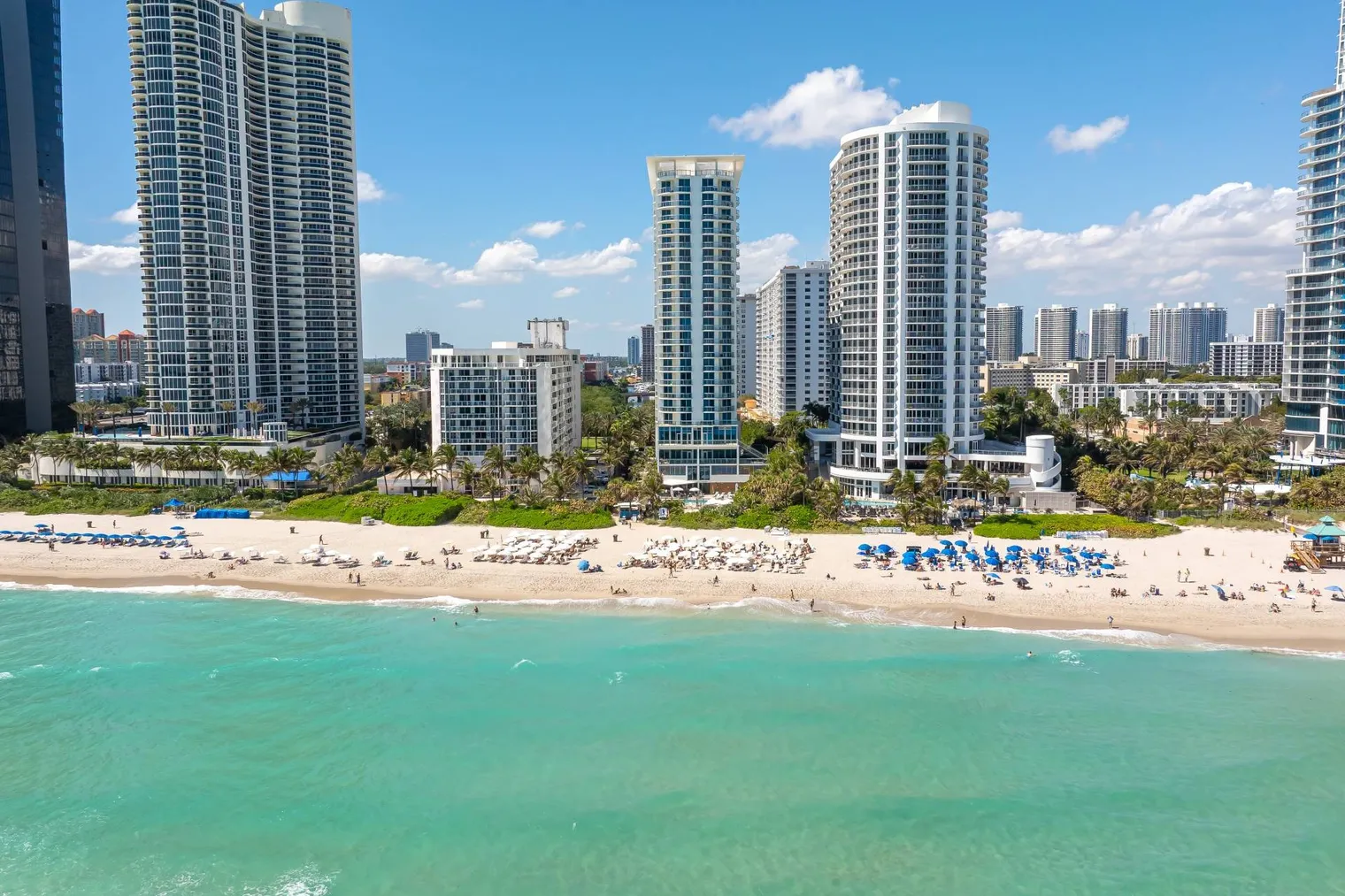
Most of the housing in Sunny Isles Beach is in oceanfront towers, each with its own rental rules.
Your building’s rules
The condo declaration and house rules decide the real answer. Three patterns show up again and again in Sunny Isles Beach.
Residential towers with long minimums
The most common case. Many residential towers set long minimum stays and limit how many times a year a unit can be leased. These units work well as seasonal or annual rentals and can still earn strongly over the winter, when demand from seasonal visitors peaks.
Hotel-program buildings
Nightly stays are allowed, often with a required or optional in-house rental program. Read the program agreement carefully: the revenue split, blackout dates and who handles cleaning all vary from building to building. Some programs let you rent outside the program; others do not.
Hybrid buildings
Some towers allow short stays on certain floors or for certain unit lines only. Others grandfather units that were renting before a rule change. This is where buyers most often get surprised, because the listing agent’s answer for one unit may not apply to the next one down the hall.
Licenses and registrations
Every short-term rental in Florida needs a state license for transient public lodging, plus registration with the state and county for tax collection. Sunny Isles Beach adds its own license and business tax receipt. Each of these is a separate filing with its own renewal date.
- State: DBPR transient public lodging license (vacation rental)
- State: Florida Department of Revenue sales tax account
- County: Miami-Dade tourist tax account
- City: short-term vacation rental license ($300) and business tax receipt ($110)
Keep copies of every license and registration with the unit’s records. Buildings and platforms can ask for proof at any time, and an expired license is one of the easiest ways to have a listing paused in the middle of the season.
Taxes on short stays
Stays of 6 months or less are taxed at 13% in Sunny Isles Beach: 6% state sales tax, a 1% county surtax, and 6% in Miami-Dade convention development, tourist development and sports franchise taxes. There is no city resort tax. Platforms collect some of these on your behalf, but not always all of them, and the owner remains responsible for anything that is missed.
What the platforms collect
Some platforms collect and remit some or all of these taxes for bookings made through them, and what they cover can change. Check each platform’s tax settings for your address. Direct bookings, repeat guests who book outside the platform and some smaller channels may not be covered.
What you collect yourself
Anything the platform does not collect, you do. That means charging the right rate at booking, filing on schedule and keeping records of each stay. Your monthly statement should show what was collected, by whom, and what was remitted.
Costs to budget for
Short stays earn more per night, but they also cost more to run. Before you compare short-term and long-term income, make sure the short-term number includes:
- Cleaning and linen service after every stay
- Platform service fees, which vary by channel
- Supplies, from coffee to toiletries
- Utilities, internet and streaming, which the owner usually pays
- Licenses, registrations and their renewals
- Management, if you are not running it yourself
None of these are unusual, but together they explain why two units with the same nightly rate can deliver very different results to their owners.
Working with the association
Even in buildings that allow short stays, the association usually wants to know who is coming and going. Expect some combination of guest registration, a front desk check-in, parking passes and move-in rules for luggage and deliveries. Some associations charge a fee for this, per stay or per year.
The owners who do best here treat the association as a partner. They keep registrations current, answer complaints the same day and make sure guests know the house rules before they arrive. A building that trusts its short-term owners is less likely to vote for a longer minimum stay.
How to check before you buy
Use the city fact panel for the floor, then confirm the building. Our “Can I Airbnb my condo?” tool gives the city-level answer, and the Sunny Isles Beach page keeps the fact panel current.
- Read the declaration and house rules for minimum stays and lease limits.
- Ask the association how many units currently rent short-term.
- Check the board minutes for proposed rule changes.
- Confirm the licenses the unit will need and how long they take.
- Run the numbers both ways with the rental income estimator.
If you already own here and the numbers aren’t working, the fee is usually the first place to look. If you’re paying over 15%, let’s compare.

